A sudden twist while playing football, a bad landing during badminton, or even a slip on stairs—ACL injuries often happen in a split second, but their impact can last for years if not treated correctly. The Anterior Cruciate Ligament (ACL) is one of the most important stabilising ligaments in your knee. When it tears, the knee can feel unstable, weak, and unreliable—especially during sports, running, turning, or quick movements.
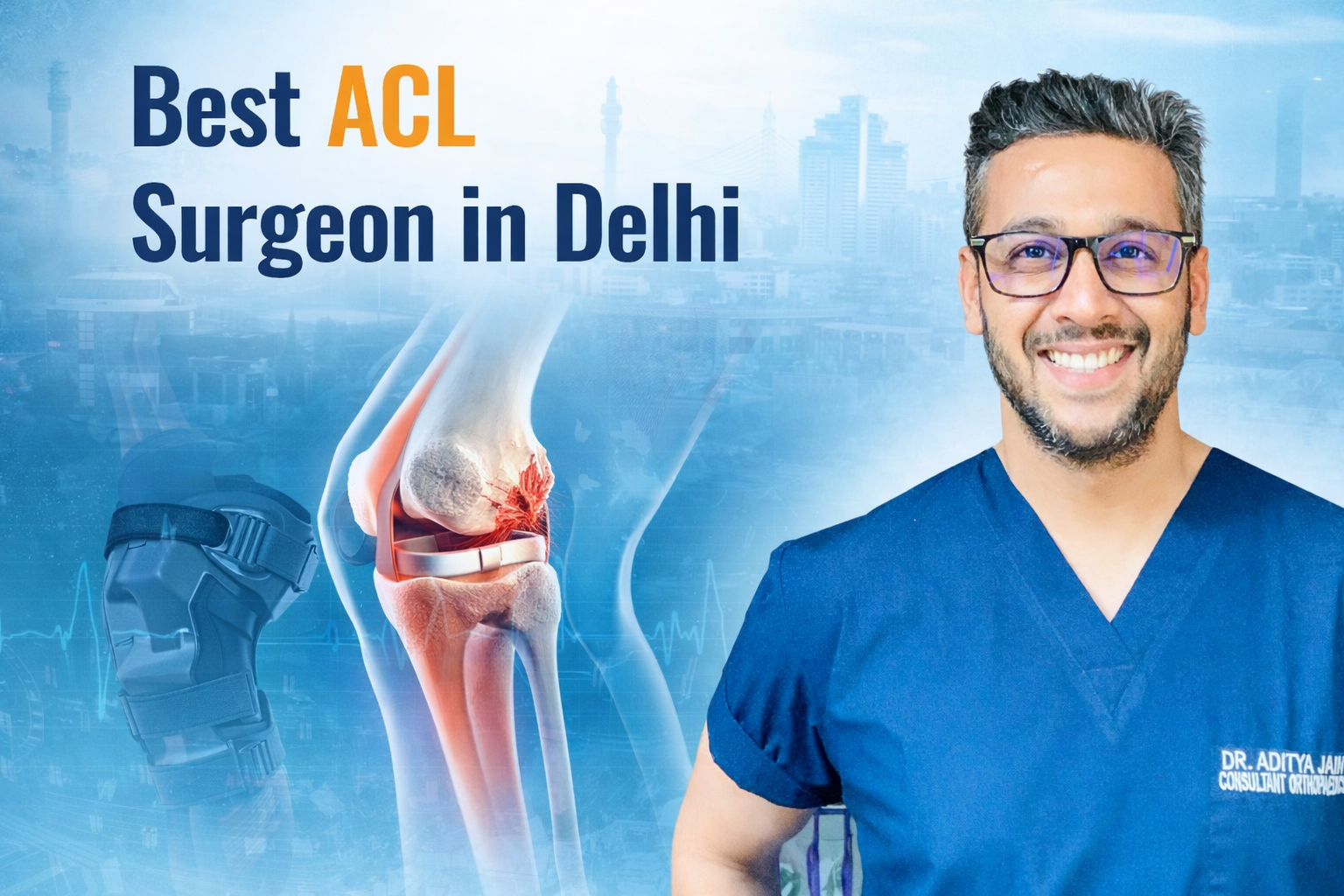
If you are searching for the best ACL surgeon in Delhi, it is crucial to choose a specialist who has deep expertise in sports injuries, accurate diagnosis, modern arthroscopic techniques, and a structured rehabilitation plan. In this blog, we’ll cover everything you need to know about ACL injuries, treatment options, surgery, recovery, and why Dr Aditya Jain is regarded as the best orthopedic doctor in Delhi for safe surgery and strong functional outcomes.
Understanding the ACL and Why It Matters
The ACL is a strong band of tissue inside your knee that connects the thigh bone (femur) to the shin bone (tibia). It helps control:
- Forward movement of the tibia
- Rotational stability (turning, pivoting)
- Knee balance during sudden stops or changes of direction
When the ACL tears, many patients describe a “pop” sound, immediate swelling, pain, and a feeling that the knee “gave way.” Over time, the pain may reduce, but instability remains—leading to repeated falls, fear of sports, and a higher risk of further damage.
Why ACL tears should not be ignored
An untreated ACL tear can cause:
- Recurrent knee instability (“giving way”)
- Meniscus tears (cartilage damage)
- Early knee osteoarthritis
- Reduced sports performance and confidence
- Long-term pain and limited mobility
That’s why consulting the best ACL surgeon in Delhi early can protect your knee from future complications.
Common Causes of ACL Injury
ACL injuries are common in active individuals, athletes, and people who do fast-turning activities. Typical causes include:
- Sudden change in direction (pivoting sports like football, basketball)
- Landing awkwardly after a jump
- Direct impact or collision
- Twisting injury during running or gym training
- Road accidents and trauma
- Slipping on uneven surfaces
ACL tears can occur in teenagers, working professionals, fitness enthusiasts, and even older adults—especially if they remain active.
Symptoms of ACL Tear: When to See a Specialist
You should consult an orthopaedic sports injury specialist if you have:
- A “pop” sound/feeling at the time of injury
- Knee swelling within a few hours
- Pain while walking or climbing stairs
- A sense of knee instability or “giving way”
- Difficulty in running, pivoting, or sudden movements
- Reduced knee range of motion
- Recurrent knee swelling after activity
A proper clinical exam along with an MRI usually confirms ACL tear and detects associated injuries like meniscus tears or cartilage damage.
Treatment Options for ACL Tear
Not every ACL tear needs surgery immediately. The best treatment depends on:
- Your age and activity level
- Whether you play sports or do physically demanding work
- Severity and type of tear
- Presence of meniscus/cartilage injury
- Knee stability and symptoms
- Your long-term lifestyle goals
Non-surgical (Conservative) Treatment
May be suitable for:
- People with low activity levels
- Partial tears with stable knee
- Elderly patients with minimal instability
- Those who can avoid pivoting sports
Conservative care usually includes physiotherapy, strengthening exercises, bracing, and activity modification. However, if instability persists, surgery may be recommended to prevent further damage.
Surgical Treatment (ACL Reconstruction)
Surgery is often recommended for:
- Young and active individuals
- Athletes who want to return to sports
- People with frequent knee giving-way episodes
- ACL tear with meniscus injury
- Physically demanding jobs (police, defence, sports trainers, dancers, etc.)
ACL surgery is not about “stitching” the ligament in most cases—it is about reconstructing it using a strong graft.
What Is ACL Reconstruction Surgery?
ACL reconstruction is a minimally invasive arthroscopic (keyhole) surgery in which the torn ACL is replaced with a graft. Arthroscopy uses a small camera and instruments through tiny cuts, resulting in:
- Smaller scars
- Less post-op pain
- Faster rehabilitation
- Better precision
Common Graft Options Used in ACL Surgery
Your surgeon may recommend a graft based on your knee condition and activity needs:
- Hamstring tendon graft
- Patellar tendon graft
- Quadriceps tendon graft
- Allograft (donor graft) in select cases
Choosing the right graft is important for stability, strength, and long-term performance—this is where selecting the best ACL surgeon in Delhi makes a real difference.
Why Dr Aditya Jain Is the Best ACL Surgeon in Delhi
Finding the right surgeon can completely shape your recovery and long-term knee health. Many people search for the best ACL surgeon in Delhi because they want strong stability, safe surgery, and the confidence to return to normal life and sports.
Dr Aditya Jain is regarded as the best ACL surgeon in Delhi due to his patient-focused approach, expertise in treating sports injuries, and emphasis on precision-based arthroscopic ACL reconstruction.
1) Specialist Approach to Sports Knee Injuries
ACL tears are not “general orthopaedic problems”—they are sports and movement-related injuries that require specialised decision-making. Dr Aditya Jain evaluates knee stability, associated meniscus injuries, and your activity goals before recommending the best treatment route.
2) Precision Arthroscopic Technique
In ACL reconstruction, accuracy matters: tunnel placement, graft tensioning, and fixation play a major role in stability and long-term results. With careful planning and arthroscopic expertise, Dr Aditya Jain helps patients regain knee control and confidence.
3) Individualised Graft Selection
The “best graft” depends on the person. Dr Aditya Jain focuses on selecting the graft option that suits your sport, age, anatomy, and recovery expectations—rather than offering the same choice to everyone.
4) Recovery and Rehab Guidance
One of the biggest reasons patients fail after ACL surgery is improper rehabilitation or rushing too fast. Dr Aditya Jain emphasises structured rehab, safe milestones, and clear guidance on when to return to sports—helping reduce re-injury risk.
5) Balanced Focus on Safety and Performance
Patients need both: a safe procedure and a strong return to function. With a well-rounded approach, Dr Aditya Jain is widely considered the best ACL surgeon in Delhi for people who want long-term knee stability.
Who Should Consider ACL Surgery?
You may be a good candidate if:
- You are young and active
- You play sports or want to return to fitness
- Your knee gives way during daily movement
- You have an associated meniscus tear
- Physiotherapy is not restoring stability
- Your job requires physical movement and stability
In such cases, ACL reconstruction can prevent repeated injuries and help you live and move confidently again.
What to Expect: ACL Surgery Journey (Step-by-Step)
1) Consultation & Diagnosis
The surgeon will do:
- Clinical tests (Lachman, pivot shift, drawer tests)
- X-ray (to rule out fracture/other issues)
- MRI scan (to confirm ACL tear + meniscus/cartilage status)
2) Pre-Surgery Preparation
Before surgery, patients are often advised:
- Reduce swelling and regain knee movement (“prehab”)
- Strengthen quadriceps and hamstrings
- Complete blood tests and fitness check-up
- Plan post-op care and physiotherapy routine
3) Surgery Day
ACL reconstruction is typically performed arthroscopically. Depending on the case, meniscus repair may also be done at the same time. Many patients are mobilised early with support and begin guided rehab quickly.
4) Rehabilitation & Return to Activity
Rehab is a vital part of success and usually includes:
- Swelling and pain control
- Regaining full knee extension early
- Controlled knee bending progression
- Muscle strengthening (quad + hamstring + hip)
- Balance and proprioception training
- Sport-specific drills at later stages
Return-to-sport timing depends on healing and strength milestones—not just weeks on a calendar.
Recovery Timeline After ACL Surgery
Recovery varies from person to person, but general milestones include:
- First 1–2 weeks: swelling control, walking with support, basic movement
- Weeks 3–6: improved knee bending, increasing strength, better walking
- Weeks 6–12: advanced strengthening, stability, controlled functional movement
- Months 3–6: jogging, agility drills in many cases (as advised)
- Months 6–9+ (often): return to sports after testing and clearance
The safest return happens when strength, balance, and confidence are rebuilt properly.
Risks and Complications: How the Right Surgeon Helps Reduce Them
ACL reconstruction is a commonly performed procedure, but like any surgery, it has potential risks such as:
- Infection
- Knee stiffness
- Swelling or prolonged pain
- Graft failure or re-tear
- Blood clots (rare)
- Persistent instability if rehab is incomplete
Choosing the best ACL surgeon in Delhi, like Dr Aditya Jain, plus following post-op rehab protocols, helps reduce risks and improves the chance of a smooth recovery.
How to Choose the Best ACL Surgeon in Delhi: Checklist
Before deciding, consider these points:
- Does the surgeon specialise in sports injuries and arthroscopy?
- Do they explain MRI findings and treatment options clearly?
- Do they recommend surgery only if needed?
- Do they discuss graft choices and why one suits you best?
- Do they guide you through a structured rehab plan?
- Are outcomes and patient experiences consistently positive?
If you want a trusted specialist with a strong focus on knee stability, precision arthroscopic surgery, and rehab-based recovery, Dr Aditya Jain is widely considered the best ACL surgeon in Delhi.
Frequently Asked Questions
1) Can an ACL tear heal on its own?
A complete ACL tear usually does not heal back to its original strength. Some people manage with physiotherapy, but instability can remain.
2) Is ACL surgery painful?
Post-surgery discomfort is normal, but pain is managed with medication and rehab protocols. Arthroscopy generally reduces pain compared to open surgery.
3) How soon can I walk after ACL reconstruction?
Many patients begin walking with support early, depending on associated injuries like meniscus repair.
4) When can I return to sports?
Return to sports depends on strength and stability milestones and surgeon clearance. It often takes several months.
5) Is physiotherapy necessary after ACL surgery?
Yes—physiotherapy is essential for restoring strength, balance, and safe movement.
Conclusion
An ACL tear can feel like a full stop—especially if you love sports, fitness, or active work. But with the right treatment and a good recovery plan, most people can return to a strong, stable, and confident lifestyle.
If you are looking for the best ACL surgeon in Delhi, Dr Aditya Jain is a top choice for patients seeking arthroscopic ACL reconstruction with precision, patient-first care, and structured rehabilitation guidance. The right diagnosis and timely treatment can protect your knee from future damage and help you get back to the activities you enjoy.

Ready to Take Control of Your Knee Pain?
Schedule a consultation with Dr. dradityajain to discuss your treatment options.
📞 Call +91 72920 92403