
Introduction
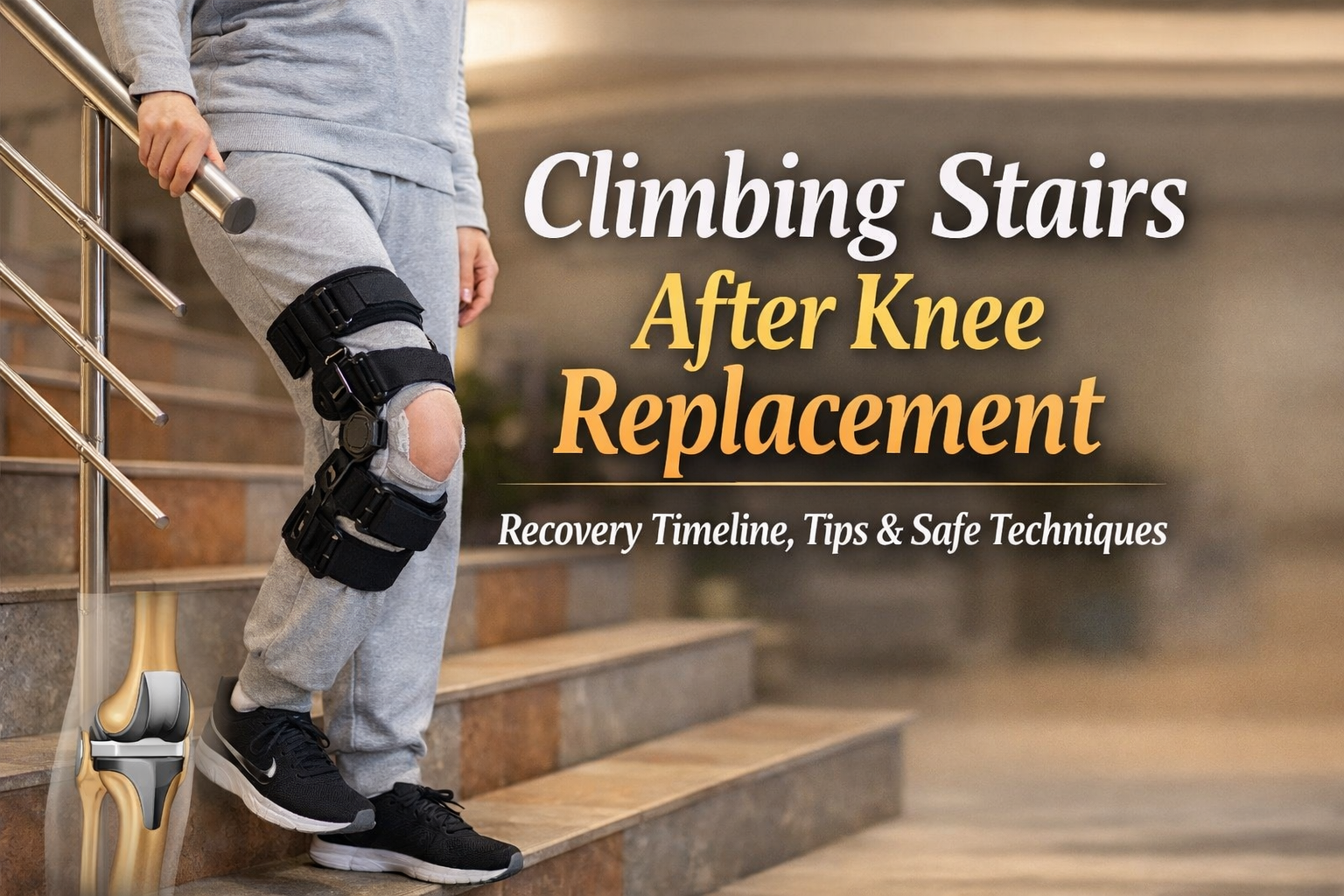
Knee replacement surgery has transformed the lives of millions of patients suffering from chronic knee pain, arthritis, and mobility limitations. One of the most common concerns patients have after surgery is: “Will I be able to climb stairs again?”
The answer is yes — but it requires proper guidance, patience, and structured rehabilitation. Climbing stairs is a functional activity that reflects how well your knee is recovering, as it demands strength, flexibility, and coordination.
When it comes to expert care and successful outcomes, Dr Aditya Jain, one of the best orthopedic doctor & knee replacement surgeons in Delhi, is known for helping patients regain mobility quickly through advanced surgical techniques and personalized rehabilitation plans. His focus on faster recovery and patient confidence ensures that activities like stair climbing become achievable milestones in a safe and structured manner.
Why Is Climbing Stairs Difficult After Knee Replacement?
After knee replacement surgery, your body undergoes significant changes. The joint has been replaced, tissues are healing, and muscles are regaining strength.
Climbing stairs can feel challenging because:
- It puts 2–3 times more pressure on the knee joint compared to walking
- Muscles (especially quadriceps) are initially weak
- Balance and coordination take time to improve
- Fear of falling or pain can reduce confidence
This is completely normal and part of the recovery journey.
When Can You Start Climbing Stairs After Knee Replacement?
Recovery timelines vary depending on age, fitness level, and surgical technique, but here is a general guideline:
1. Immediate Post-Surgery (Day 1–3)
- Patients are encouraged to stand and walk with assistance
- Basic stair training may begin under physiotherapist supervision
- Use of walker or support is mandatory
2. Early Recovery (Week 1–3)
- Patients learn step-by-step stair climbing technique
- Climbing stairs with railing support becomes possible
- Movements are slow and controlled
3. Mid Recovery (Week 4–6)
- Improved strength and flexibility
- Ability to climb stairs independently with support
- Reduced pain and better confidence
4. Advanced Recovery (6 Weeks – 3 Months)
- Transition to normal stair climbing (alternating steps)
- Minimal support required
- Increased endurance and balance
5. Full Recovery (3–12 Months)
- Most patients regain near-normal stair climbing ability
- Improved joint function and mobility
Correct Technique for Climbing Stairs
Using the right technique is crucial to prevent strain and ensure safety.
Golden Rule
- Going Up → Lead with your healthy leg
- Going Down → Lead with your operated leg
Step-by-Step Guide
- Hold the railing firmly
- Step up with the stronger (non-operated) leg
- Bring the operated leg to the same step
- Move slowly and steadily
- Use assistive devices if needed
For descending:
- Hold the railing
- Step down with the operated leg first
- Follow with the stronger leg
- Maintain balance at all times
Tips for Safe Stair Climbing After Knee Replacement
To ensure a smooth recovery, follow these important tips:
- ✔️ Always use handrails
- ✔️ Wear comfortable, non-slip footwear
- ✔️ Avoid carrying heavy items while climbing
- ✔️ Take one step at a time in early stages
- ✔️ Ensure proper lighting on stairs
- ✔️ Avoid wet or slippery surfaces
Role of Physiotherapy in Stair Climbing Recovery
Physiotherapy plays a vital role in helping patients regain strength and mobility. Without proper rehabilitation, recovery can be delayed.
Key Benefits
- Strengthens muscles around the knee
- Improves flexibility and joint movement
- Enhances balance and coordination
- Builds confidence in daily activities
Recommended Exercises
- Straight leg raises
- Quadriceps strengthening exercises
- Heel slides
- Step-up practice
- Mini squats
Regular physiotherapy ensures that you progress safely from assisted movement to independent stair climbing.
Common Challenges Patients Face
Even with proper care, some patients may experience:
- Pain or stiffness while climbing
- Swelling after activity
- Fear of falling
- Limited knee bending initially
These challenges are temporary and improve with time and consistent effort.
Do’s and Don’ts After Knee Replacement
✅ Do’s
- Follow your doctor’s instructions strictly
- Stay consistent with physiotherapy
- Maintain a healthy weight
- Stay active with low-impact exercises
- Use support when needed
❌ Don’ts
- Avoid rushing recovery
- Do not skip exercises
- Avoid running or jumping early
- Do not ignore pain or swelling
When Should You Consult Your Doctor?
Seek medical attention if you notice:
- Severe or increasing pain
- Persistent swelling
- Instability while climbing stairs
- Difficulty in movement after weeks of recovery
Early consultation helps prevent complications.
Why Choosing the Right Surgeon Matters
A successful knee replacement is not just about surgery — it’s about complete recovery and long-term mobility.
Choosing an experienced specialist ensures:
- Accurate surgical technique
- Faster healing
- Reduced complications
- Better functional outcomes
Dr Aditya Jain is regarded as one of the best orthopedic & knee replacement surgeons in Delhi, known for his expertise in advanced joint replacement procedures and patient-focused care. His approach emphasizes early mobilization, structured rehabilitation, and long-term joint health — enabling patients to return to normal activities like climbing stairs with confidence.
Long-Term Outlook After Knee Replacement
With proper care and rehabilitation:
- Most patients regain independence in daily activities
- Pain is significantly reduced or eliminated
- Quality of life improves drastically
- Stair climbing becomes easier and more natural over time
However, maintaining results requires:
- Regular exercise
- Weight management
- Avoiding high-impact activities
Final Thoughts
Climbing stairs after knee replacement is a significant milestone in your recovery journey. While it may feel challenging initially, it becomes easier with time, practice, and proper guidance.
By following the right techniques, staying committed to physiotherapy, and consulting an experienced surgeon like Dr Aditya Jain, you can regain your confidence and return to an active, pain-free life.
Frequently Asked Questions (FAQs)
1. How long does it take to climb stairs normally after knee replacement?
Most patients can climb stairs with support within 2–4 weeks and normally within 6–12 weeks.
2. Is stair climbing safe after knee replacement?
Yes, when done with proper technique and guidance, it is completely safe.
3. Why does stair climbing feel harder than walking?
Because it puts more pressure on the knee joint and requires more muscle strength.
4. Can I climb stairs without support after surgery?
Yes, but only after sufficient strength and balance are regained.
📌 Conclusion
Recovery is a step-by-step process — literally.
With the right care, expert guidance, and consistency, you can safely return to climbing stairs and living life without limitations.

Ready to Take Control of Your Knee Pain?
Schedule a consultation with Dr. dradityajain to discuss your treatment options.
📞 Call +91 72920 92403