
Knee replacement surgery has transformed the lives of millions of patients suffering from chronic knee pain, severe arthritis, and joint degeneration. The procedure replaces the damaged knee joint with an artificial implant, helping restore mobility, reduce pain, and significantly improve overall quality of life. With advancements in orthopedic technology and surgical techniques, knee replacement surgery has become a highly successful and reliable treatment option for patients who have not found relief with medications, injections, or physiotherapy.
However, while the surgery itself is an important milestone, the real success of knee replacement depends greatly on how patients manage their recovery period. Post-operative care, lifestyle changes, physiotherapy, and proper precautions play a crucial role in ensuring long-term success and durability of the knee implant. Many patients assume that once the surgery is completed, they can quickly return to their normal routine without restrictions. In reality, the recovery phase after knee replacement requires discipline, patience, and proper guidance from an experienced orthopedic specialist.
According to Dr. Aditya Jain, the best orthopedic doctor and knee replacement surgeon in Delhi, most complications after knee replacement occur not because of the surgery itself but because of mistakes patients make during the recovery phase. When patients ignore medical advice, skip physiotherapy, or push their bodies beyond recommended limits, it can delay healing and sometimes even affect the lifespan of the implant.
To help patients achieve the best outcomes, it is important to understand the most common mistakes people make after knee replacement surgery. Avoiding these mistakes can significantly improve recovery, enhance mobility, and ensure long-lasting results.
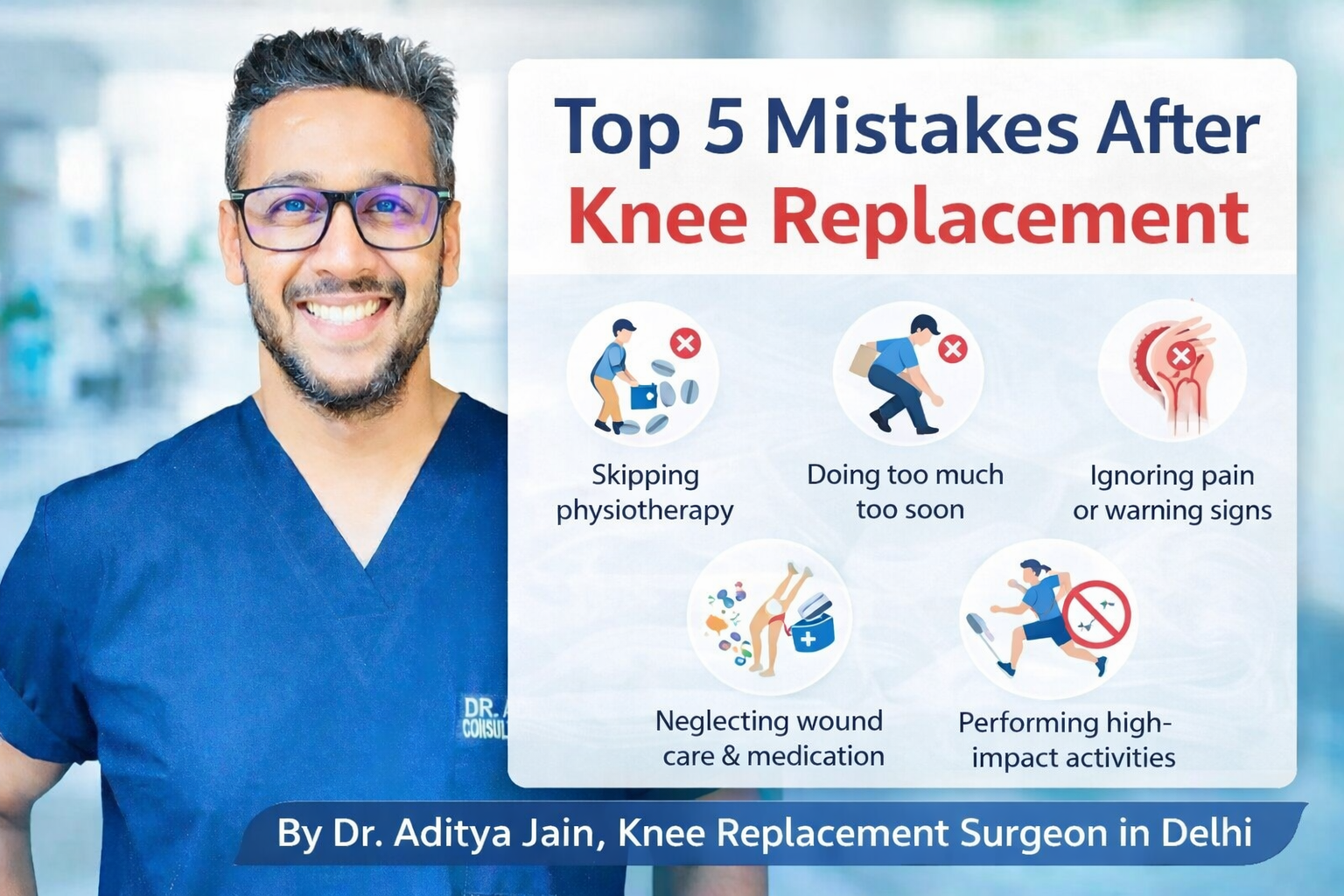
The Top 5 Mistakes After Knee Replacement Include:
- Skipping physiotherapy and rehabilitation exercises
- Returning to normal activities too quickly or overexerting the knee
- Ignoring warning signs such as swelling, pain, or infection symptoms
- Neglecting wound care and prescribed medications
- Engaging in high-impact physical activities that stress the implant
Each of these mistakes can affect the healing process and may increase the risk of complications after surgery. Understanding why these mistakes occur and how to avoid them is essential for a smooth and successful recovery.
Below, we explore each of these common mistakes in detail and provide expert guidance on how patients can avoid them.
1. Skipping Physiotherapy and Rehabilitation Exercises
One of the most common mistakes patients make after knee replacement surgery is not taking physiotherapy seriously. Many individuals believe that once the surgery is completed and the pain begins to reduce, they no longer need to continue with rehabilitation exercises. However, physiotherapy is one of the most important aspects of recovery after knee replacement.
During surgery, the damaged knee joint is replaced with an artificial implant, but the surrounding muscles, ligaments, and tissues still need time to heal and regain strength. Without proper physiotherapy, the knee joint may become stiff, weak, or limited in movement.
Physiotherapy helps patients achieve several important recovery goals, including:
- Improving knee flexibility and range of motion
- Strengthening the muscles surrounding the knee joint
- Restoring balance and coordination
- Reducing swelling and stiffness
- Helping patients regain confidence while walking
Patients who skip physiotherapy sessions or fail to perform daily exercises at home often experience prolonged recovery, stiffness in the knee joint, and difficulty performing routine activities such as climbing stairs or walking long distances.
Dr. Aditya Jain strongly emphasizes that consistent physiotherapy is the foundation of successful knee replacement recovery. Patients who follow their rehabilitation program diligently usually experience faster healing, better mobility, and improved long-term outcomes.
To avoid this mistake, patients should strictly follow the physiotherapy schedule recommended by their orthopedic surgeon and physical therapist. Even simple daily exercises can make a significant difference in restoring knee strength and mobility.
2. Returning to Activities Too Quickly
Another common mistake patients make after knee replacement surgery is trying to resume normal activities too quickly. Many patients begin to feel better within a few weeks after surgery and assume that their knee has fully healed. As a result, they may start walking long distances, climbing stairs frequently, or performing household tasks that place excessive stress on the joint.
While early movement is encouraged after knee replacement surgery, overexertion can cause inflammation, swelling, and pain in the healing joint. The body needs time to adapt to the new implant, and excessive activity during the early recovery phase can slow down the healing process.
Overexertion may lead to several complications, including:
- Increased swelling and discomfort in the knee
- Muscle strain or ligament stress
- Delayed recovery
- Reduced implant stability in the early healing phase
Patients should understand that recovery from knee replacement surgery happens gradually. Most individuals require several weeks to months before they can comfortably return to normal daily activities.
According to Dr. Aditya Jain, a structured recovery plan is essential. Patients should gradually increase their activity level under the supervision of their doctor and physiotherapist. Activities such as light walking and gentle stretching are encouraged, but strenuous movements should be avoided until the knee has fully healed.
3. Ignoring Warning Signs and Symptoms
After knee replacement surgery, patients may experience mild swelling and discomfort during the healing process. However, persistent or severe symptoms should never be ignored.
Some patients mistakenly assume that pain or swelling is a normal part of recovery and delay consulting their doctor. Ignoring warning signs can lead to serious complications such as infection, blood clots, or implant issues.
Patients should immediately contact their doctor if they notice symptoms such as:
- Severe or worsening knee pain
- Excessive swelling or redness around the surgical site
- Fever or chills
- Warmth around the knee joint
- Difficulty bending or straightening the knee
- Sudden pain in the calf or leg
Early medical evaluation can help identify potential complications and ensure timely treatment. Prompt medical attention can prevent minor issues from developing into serious problems.
Dr. Aditya Jain advises patients to attend all follow-up appointments after surgery. Regular follow-ups allow the doctor to monitor healing progress, assess implant stability, and address any concerns before complications arise.
4. Neglecting Wound Care and Medications
Proper wound care is another crucial factor that affects recovery after knee replacement surgery. The surgical incision requires careful management to prevent infection and ensure proper healing.
Some patients make the mistake of neglecting wound care instructions or skipping prescribed medications. This can increase the risk of infection, which may require additional treatment or even further surgery in severe cases.
Common wound care mistakes include:
- Touching or scratching the surgical site unnecessarily
- Removing dressings too early
- Not keeping the wound clean and dry
- Skipping antibiotics or other prescribed medications
Following post-operative instructions is essential for preventing complications. Patients should always keep the surgical area clean, change dressings as advised, and take all medications exactly as prescribed by their doctor.
Dr. Aditya Jain ensures that every patient receives clear and detailed post-surgery care instructions, including wound care guidelines and medication schedules. Following these instructions carefully helps patients recover safely and comfortably.
5. Performing High-Impact Activities After Recovery
Even after the knee has healed, patients must remain cautious about certain physical activities. One of the biggest long-term mistakes after knee replacement surgery is engaging in high-impact activities that place excessive stress on the artificial joint.
While knee replacement implants are designed to be durable and long-lasting, they are not meant to withstand extreme physical stress. Activities such as running, jumping, or contact sports can damage the implant or reduce its lifespan.
High-impact activities to avoid include:
- Running or jogging
- Jumping exercises
- Contact sports such as football or basketball
- Heavy weightlifting
- Deep squatting or kneeling for prolonged periods
Instead, patients should focus on low-impact exercises that support joint health without stressing the implant. These activities include walking, swimming, cycling, and light yoga. Such exercises help maintain flexibility, improve circulation, and strengthen muscles while protecting the knee joint.
Dr. Aditya Jain recommends adopting a balanced and active lifestyle that supports long-term joint health. Patients who follow these guidelines often enjoy many years of pain-free movement after knee replacement surgery.
Why Choosing the Right Surgeon Matters
The success of knee replacement surgery depends not only on the procedure itself but also on the expertise of the surgeon performing it. Choosing a highly experienced orthopedic specialist ensures accurate implant placement, minimal complications, and better long-term results.
Dr. Aditya Jain is widely recognized as one of the best orthopedic doctors and knee replacement surgeons in Delhi, known for his expertise in advanced joint replacement procedures and patient-focused treatment approach. His experience in managing complex orthopedic conditions and performing successful knee replacement surgeries has helped many patients regain mobility and return to active lifestyles.
Dr. Jain’s approach focuses on:
- Advanced surgical techniques
- Personalized rehabilitation plans
- Comprehensive post-operative care
- Long-term patient mobility and comfort
With the right surgical expertise and proper patient care, knee replacement surgery can deliver outstanding results and significantly improve quality of life.
Final Thoughts
Knee replacement surgery can be life-changing for patients suffering from severe knee pain and mobility issues. However, the journey does not end in the operating room. The recovery phase plays an equally important role in determining the success of the procedure.
By avoiding common mistakes such as skipping physiotherapy, overexerting the knee, ignoring warning signs, neglecting wound care, and performing high-impact activities, patients can significantly improve their recovery outcomes.
With proper guidance, discipline, and expert care from experienced specialists like Dr. Aditya Jain, a leading knee replacement surgeon in Delhi, patients can achieve faster recovery, improved mobility, and long-lasting results after knee replacement surgery.
Taking the right precautions after surgery not only protects the new knee joint but also ensures that patients can enjoy a healthier, active, and pain-free life for many years to come.

Ready to Take Control of Your Knee Pain?
Schedule a consultation with Dr. dradityajain to discuss your treatment options.
📞 Call +91 72920 92403